The last reflection ended where every vocation finally rests — in love that stays directed, the fruit that lasts because the will keeps re-aiming its offering toward God and toward those it serves. But it left a question standing underneath that conclusion. If fidelity is an offering continually re-aimed, what feeds the offering when the one offering it runs dry, and where does so small a gift finally go? A branch can resolve to bear fruit all it likes; cut from the vine, it bears nothing. Love that stays directed has to be fed, and it has to be gathered into something larger than itself, or it is only resolve. The Church hands us the answer to both on a single feast. In the Eucharist, we are given at once the food that keeps the branch alive and the Oblation into which every small offering is taken up — the vine’s own life poured into us, and the one Sacrifice into which our every yes is folded. I was reminded of all this in a way I did not plan, on a Corpus Christi that fell on the weekend my Diocese ordained new priests.
Even though I had an entire homily written for my Masses, the ordination added to my thoughts and completely changed my homily.
I left earlier in the morning to get to the Cathedral. I like to get there to pray before the crowds get in, catch up with brother priests who are there, and find a parking spot (though not the most important thing). This particular day, I knew one of the ordinands and his family. When I got there, I saw his mother and went over to congratulate her on her son’s big day.
In our discussion near the Sanctuary, she shared her excitement about what was about to take place. She asked me if I remembered my own ordination. I told her that I did, and, as I pointed out, I remembered the pew I was in when it began. I told her I remember looking up at the crucifix in the Sanctuary and thinking that Christ had brought me this far, and now, here I am, that this was it. I told her I remember saying in my prayers at that moment something to the effect of, “Well, Lord, you’re stuck with me once this gets going.”
We continued to talk, and I told her that nothing could have prepared me for everything and everywhere my yes would take me. I told her, there have been twists and turns, ups and downs, great times and challenging times, yet all in all, it has been a wonderful life. I looked at her and said that, really, I guess that applies to every vocation, life happens, and our yes takes us to those decisions to go through all of it.
Moses, in the first reading for the solemnity, Deuteronomy 8:2, says, “Remember how for these forty years the LORD, your God, has directed all your journeying in the wilderness, so as to test you by affliction, to know what was in your heart: to keep his commandments, or not.” He tells the Israelites that God allowed the twists and turns, the trials and challenges, to see if they meant their yes. God does not do it as some prank to His creation; He does it as part of His permissive will. I jokingly tell people that this means God does not cover us in some sort of divine bubble wrap. He wants to see how far we will take our yes, and really, give us the opportunities to make it. Another way of thinking of that is if there were no choices to be made, there would be no freedom, and likewise nothing to say yes or no to.
Like the people in the Old Testament, we are on a journey. We, too, are called to live out a relationship with God. It applies to all vocations: priestly life, religious life, married life, and even those not in any of them right now; it comes down to living out our baptism. We are on a continuous journey to God. A journey where we find ourselves reaffirming our yes many times a day. As St. Paul says in the reading for Corpus Christi (1 Cor 10:16–17), it is a participation that we are invited to live in.
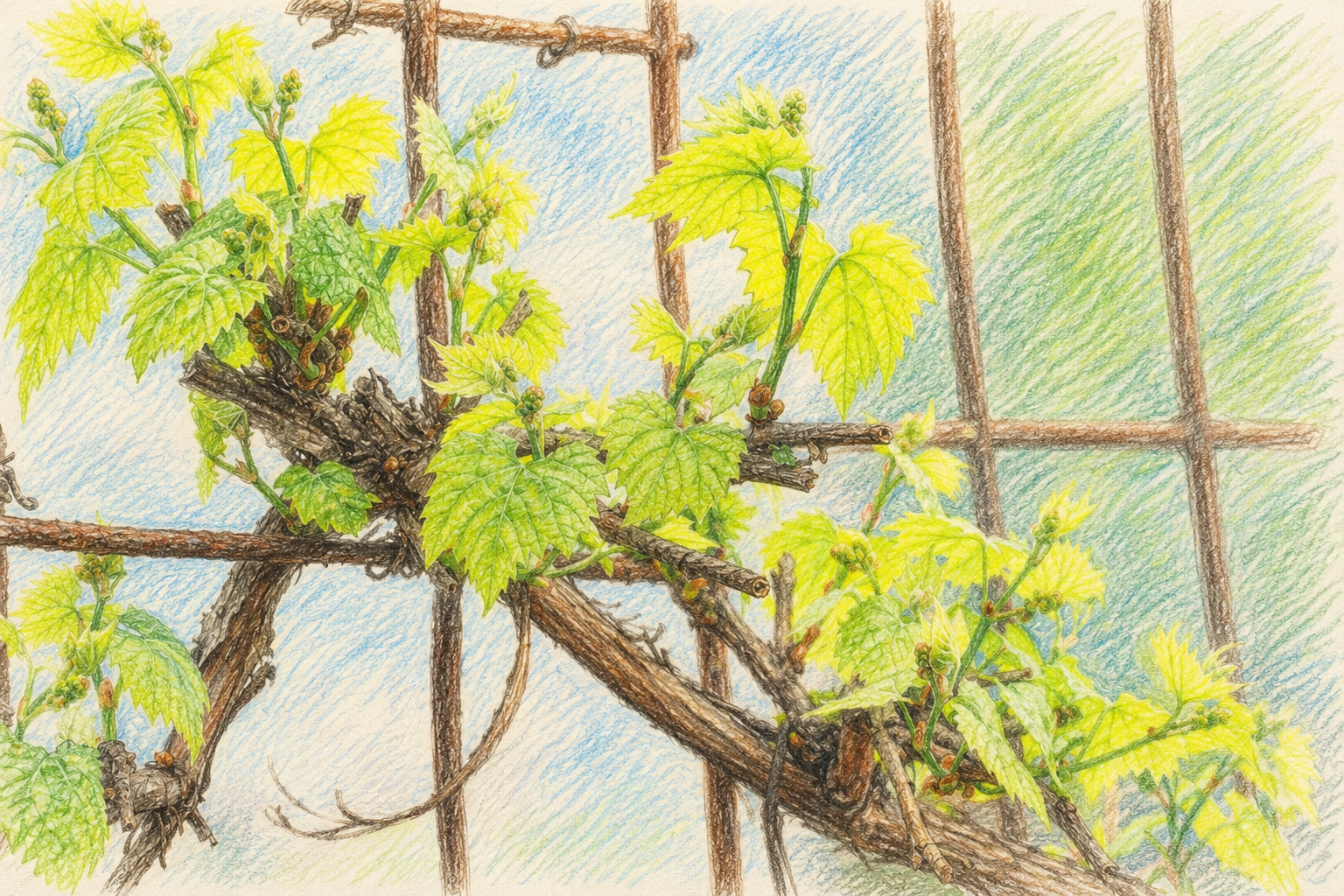
Then to the Gospel for the day (John 6) where Jesus says, “unless you eat the flesh of the Son of Man and drink his blood, you do not have life within you” (Jn 6:53). Even though it comes from another part (John 15), the vine and branches fit right into what Jesus is saying. That, unless we stay connected to Him by literally consuming Him, we have no life. In a very real way, a person separated from Christ is like a branch without a vine. Cut off, it withers, because it has no life of its own apart from what the vine provides. Jesus uses imagery we understand to explain realities that are more difficult to grasp. The Solemnity, I preached, is more than our celebrating a theological tenet of our faith, what we believe is its source and summit. We celebrate the gift of Christ’s Body and Blood, Soul and Divinity, in the Eucharist, and call to mind what that does for us. It brings that participation that St. Paul mentions.
This again fits into the ordination I was able to attend. First, for the reminder of the yes I made, and the yes we all make in our vocations. Second, another part of the Rite offered a profound reminder. It was when the Bishop presented the chalice and paten to the new priests. The bishop, holding both in his hands, presents them and says to them, “Receive the oblation of the holy people to be offered to God. Understand what you do, imitate what you celebrate, and conform your life to the mystery of the Lord’s Cross.”
While the exact words were meant for the new priests, they ring true for all the baptized.
- Understand what you do. Understand what you will do as a baptized son or daughter of God. Understand what you will do with the life that Christ gives you in the Eucharist you will receive. Keep striving to understand because our growth is never done until we reach our end.
- Imitate what you celebrate. Imitate the life of the one you receive in Communion. As St. Paul said, it is a participation we enter into. Imitate Christ, don’t just listen to the Gospel, live it.
- Conform your life to the mystery of the Lord’s Cross. From our baptisms onward, we are being transformed. This being conformed is for all. There is no one who escapes the Cross of Christ, for it is by that Cross we are saved. In that participation of God’s life, like a branch on a vine, we are conformed more and more into what we should be.
The yes of our vocation should naturally lead us to better understand, imitate Christ, and conform ourselves to His Cross. When we make our yes to our vocation as baptized, as those who receive His Body and Blood, we say yes to everything, God’s plan for our lives, His expectations, and commands.
None of us holds that yes by willpower alone. The branch does not strain to stay green; it stays joined to the vine, and the life from the vine does the rest. That is the gift Corpus Christi sets before us — not only something to believe about the Eucharist, but the very food by which our yes is kept alive and the Oblation into which it is gathered. We come forward, receive Him, and are sent back out to understand, to imitate, to be conformed; and then we come again, because the journey is long and the directing is His. Deuteronomy said as much at the start: it is the Lord who directs all our journeying. Our part is to keep saying yes, and to keep being fed. That is how a yes made once at an altar becomes, across a whole life, love that stays directed.